
Why Google Ads Works So Well for HVAC Companies
Few industries have search intent as sharp as HVAC. Someone searching "AC not cooling" at 2pm in July has a problem right now and is ready to call whoever answers first with a good ad. Google Ads reaches that exact moment, which is why it consistently outperforms other paid channels for HVAC on cost per booked job.
The math works in HVAC's favor too. A repair call might be worth $200 to $500, while a full system replacement can run $6,000 to $15,000. Even in competitive markets where clicks cost $8 to $15, acquiring a lead at $90 that converts to a booked job produces a strong, measurable return across both service types.
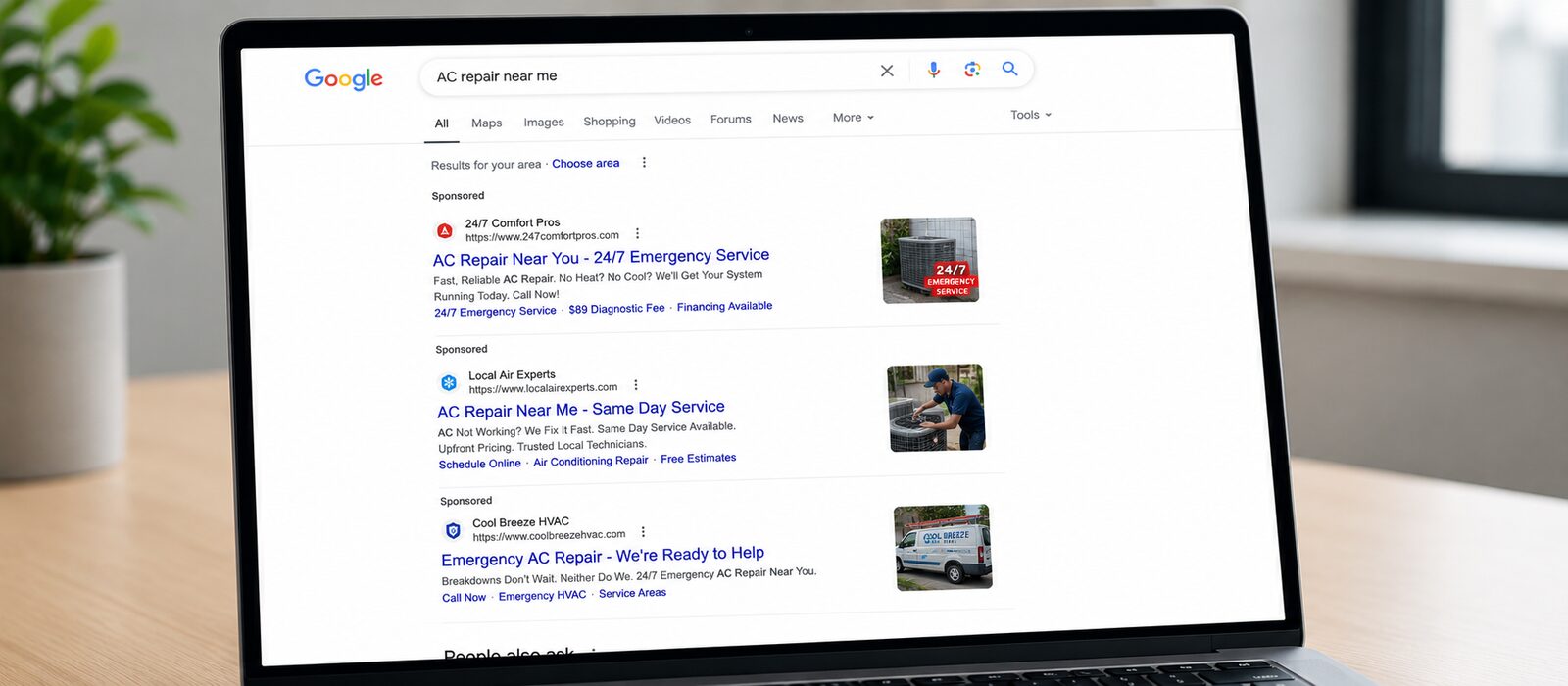
“AC repair near me” and “furnace repair near me” spike hard during extreme weather. People searching these terms are not comparing quotes over a week, they are calling within the hour. Few other channels give you that level of urgency-driven intent.
The Keywords That Actually Drive Booked Jobs
Not every HVAC keyword converts equally. The biggest lever most HVAC companies have is tightening keyword selection to high-intent terms and blocking everything else.
High-converting keyword categories
Emergency repair: “AC repair near me,” “furnace not working,” “emergency HVAC repair,” “heater repair tonight.” These searches convert at the highest rate because the homeowner needs help today, not eventually.
System replacement: “new AC unit cost,” “HVAC replacement near me,” “furnace installation quote.” Lower volume, much higher job value, and worth its own dedicated campaign and landing page.
Maintenance and tune-ups: “AC maintenance plan,” “HVAC tune-up near me.” Lower cost per click, steady volume, and a strong entry point for building recurring customer relationships.
What NOT to target
What kills most HVAC campaigns is the absence of negative keywords, search terms you explicitly block. Without a proper negative list, broad match keywords will spend your budget on:
Negative keyword starter list for HVAC
What Budget Does an HVAC Company Actually Need?
The single biggest reason HVAC Google Ads campaigns fail is underfunding, especially during peak season when competition for clicks spikes. Google's Smart Bidding needs roughly 30 to 50 conversions a month to optimize effectively. If your target cost per lead is $90 and you want 25 conversions a month, budget at least $2,250 a month, not counting the management fee.
| Market type | Monthly ad spend | Avg. CPC | Expected CPL |
|---|---|---|---|
| Small / rural market | $1,000–$2,200 | $4–$8 | $50–$90 |
| Mid-size market | $2,200–$4,500 | $7–$12 | $75–$120 |
| Competitive metro | $4,500–$9,000 | $10–$18 | $90–$180 |
| Full replacement focus | $3,000–$7,000 | $12–$22 | $120–$250 |
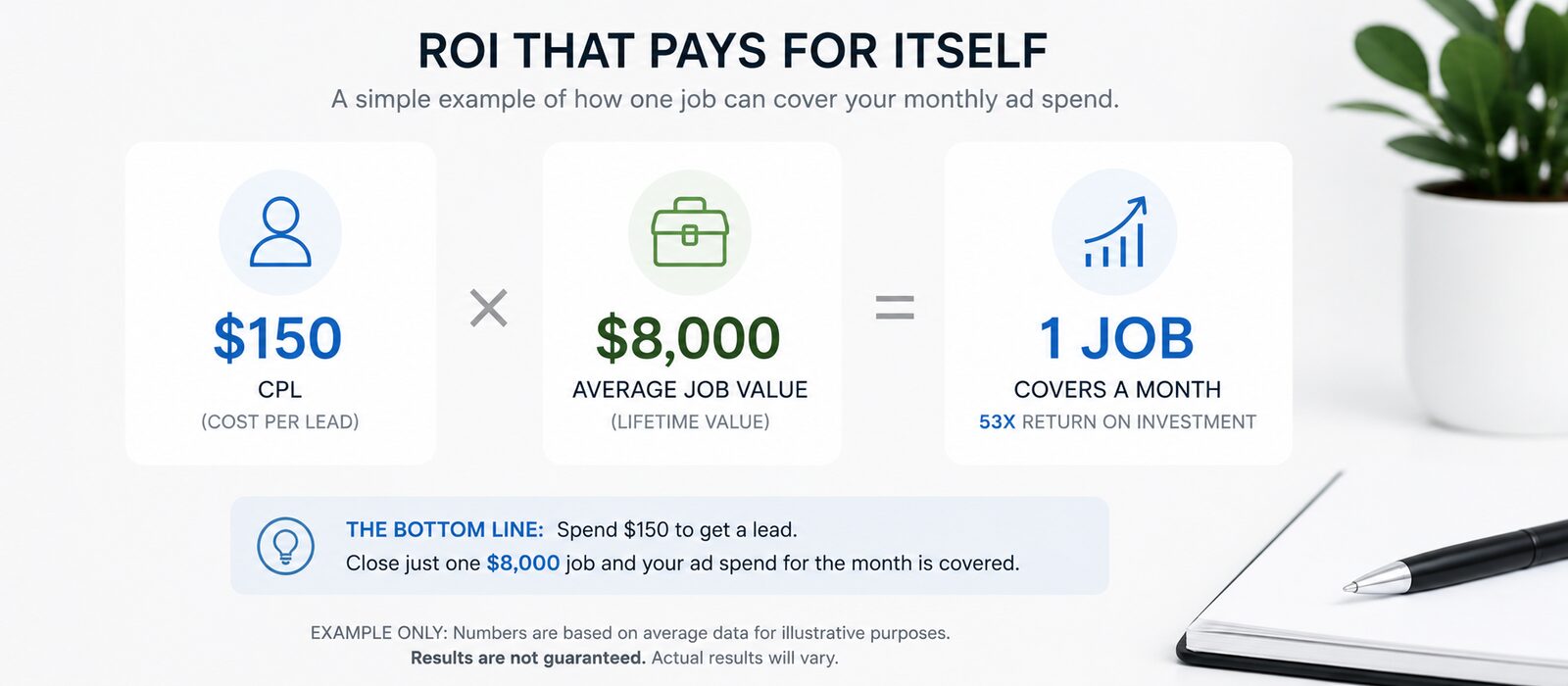
If a single system replacement is worth $8,000 and you acquire the lead at $150 cost per lead, one closed job pays for more than a month of ad spend. At those economics, the question is never whether to run Google Ads, it is why the budget is not higher during peak season.
The 5 Google Ads Mistakes HVAC Companies Make Most Often
These five mistakes account for the majority of wasted spend in HVAC Google Ads campaigns. If your campaigns are underperforming, check this list first.
Running one campaign for repair, install, and maintenance
Someone searching "AC not cooling emergency repair" and someone searching "new HVAC system cost" are in completely different buying stages and price ranges. Lumping them into one campaign with generic ad copy means neither searcher sees a message that matches their exact need. Split campaigns by repair, install, and maintenance so ad copy and landing pages can speak directly to each.
Sending all paid traffic to the homepage
Your homepage was built to introduce your company across every service you offer. It has a navigation menu, a service list, and a dozen things to click. Someone who just searched "furnace repair tonight" does not want a tour, they want a phone number. Dedicated landing pages convert 35 to 70 percent better than homepages for paid traffic.
Not tracking phone calls as conversions
Most HVAC leads start with a phone call, not a form fill, especially for emergency repairs. If your Google Ads account only counts form submissions as conversions, you are optimizing blind. Set up call tracking with call extensions and call conversion tracking before spending a dollar, and make sure it is measuring calls that actually last long enough to be real leads.
Ignoring dayparting for emergency searches
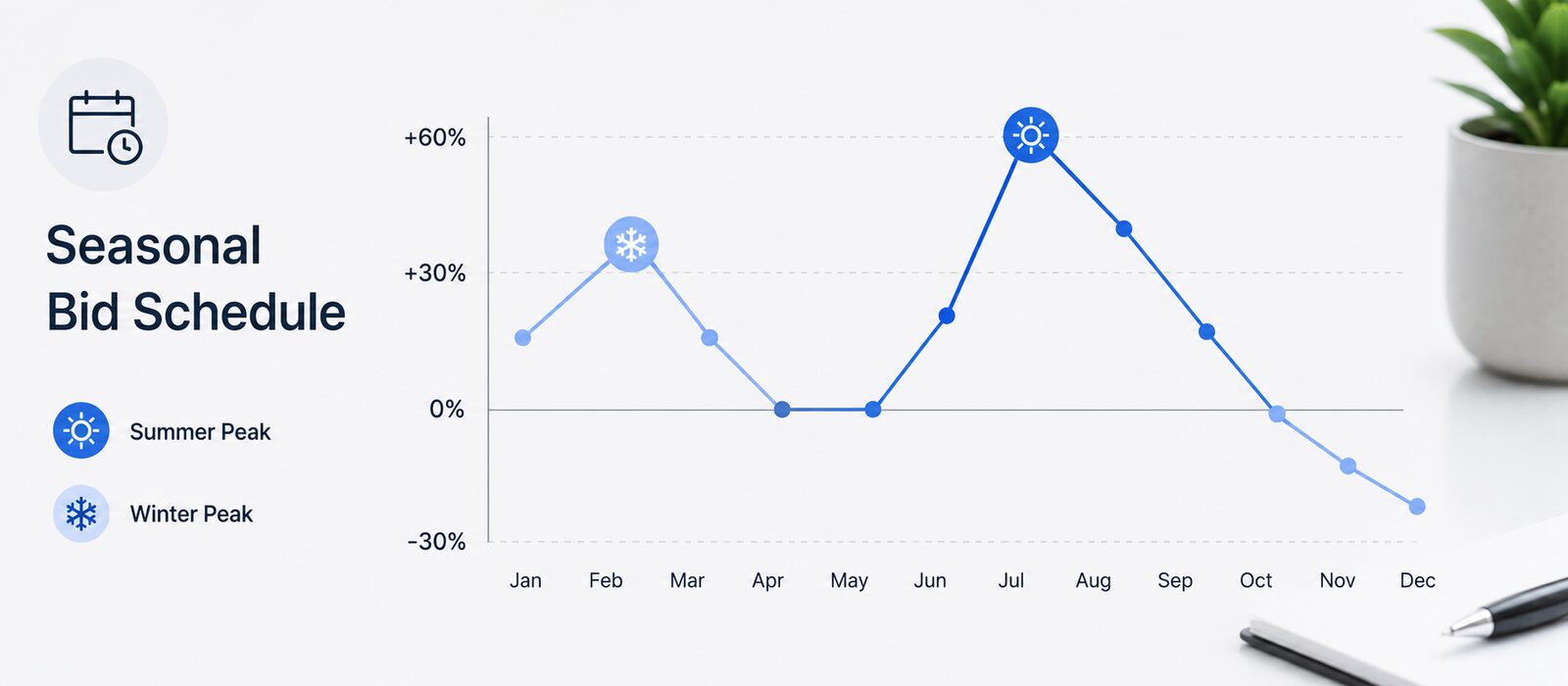
HVAC emergencies happen at all hours, and searches for "AC repair near me open now" spike on evenings, weekends, and the hottest or coldest days of the year. Running a flat bid schedule instead of adjusting for these high-intent windows means competitors who bid up during peak emergency hours win the calls you should be getting.
Setting it and forgetting it
Google Ads is not a set-it-and-forget-it channel. Search terms drift over time, competitors adjust their bids seasonally, and quality scores change. A campaign that performs well in spring will quietly deteriorate by summer without active management. The minimum viable optimization cadence for an HVAC company is weekly search term reviews and seasonal budget shifts.
What to Expect in Your First 90 Days
Unrealistic expectations are the number one reason HVAC companies give up on Google Ads too early. Here is what actually happens in a well-managed campaign.
Month 1
Campaign structure, conversion tracking, negative keywords, and separate landing pages for repair, install, and maintenance are set up. CPCs run higher than steady-state. This is normal. The goal here is data, not volume.
Month 2
The algorithm has enough data to make smarter bidding decisions across campaign types. CPL starts dropping. Search terms get reviewed weekly and dayparting gets tuned to emergency-search patterns.
Month 3
A well-managed campaign now knows which keywords and service types produce the best cost per booked job. This is when budget increases pay off most, especially heading into peak season.
Frequently Asked Questions
How much should an HVAC company spend on Google Ads per month?
Most HVAC companies see meaningful lead volume starting at $2,000 to $3,000 a month in ad spend, with competitive metro markets often needing $4,000 to $8,000 to stay in front of enough homeowners searching for repairs and installs. A simple rule: your monthly budget should be at least 25 times your target cost per lead. If you want leads at $100 each, budget at least $2,500 a month so Google has enough conversion data to optimize.
How long does it take to see results from Google Ads for an HVAC company?
Most HVAC companies see their first inbound calls within the first week of launching, since emergency repair searches convert fast. The real learning period runs 45 to 60 days, since that is how long it takes the algorithm to gather enough conversion data to optimize Smart Bidding across both repair and install campaigns.
Do HVAC companies need a landing page or can they send traffic to their website?
A dedicated landing page consistently outperforms a general website for paid traffic. Your homepage introduces every service you offer. A landing page converts someone who just searched "AC repair near me": one clear headline, a phone number, and nothing pulling them toward unrelated services. Companies that switch from their homepage to a dedicated landing page typically see conversion rates improve 35 to 70 percent.
What is a good cost per lead for HVAC Google Ads?
For repair and service calls, $50 to $100 per lead is a healthy benchmark in most markets. For full system installs, $100 to $250 is common and still profitable given the average job size. Emergency repair leads convert fastest and are often the most efficient spend, since urgency drives quick decisions.
Should an HVAC company use Google Ads or Facebook Ads?
Both, for different jobs. Google Ads captures homeowners who are actively searching, meaning their AC just went out or their furnace needs service now. Meta Ads work well for promoting seasonal maintenance plans and system replacement offers before a breakdown happens. Most HVAC companies get the strongest return leading with Google Ads and adding Meta for maintenance plan promotion.
What Google Ads campaign type works best for HVAC companies?
Search campaigns targeting exact match and phrase match keywords remain the highest-converting option for HVAC. Local Service Ads are especially strong for HVAC, since they appear above regular results, charge per lead instead of per click, and carry a Google Guaranteed badge that builds trust for emergency calls. Performance Max can be added later once you have 50 or more conversions a month of history.